
How to quit vaping when you use it for stress, focus or boredom
Most quit apps and quit guides are written for cigarettes first, with vaping added as an afterthought. This one is not. Here is what withdrawal from vaping actually feels like, why it so often gets tangled up with anxiety and focus, and a real plan for the thirty days ahead.
These three reasons come up more than any others. Naming which one applies to you is the actual starting point, more than any app or product.
Vaping has grown fast enough, and quietly enough, that a lot of people who use it regularly never quite decided to start, and now are not sure how to stop. According to the 2024 National Youth Tobacco Survey, roughly one in seventeen middle and high school students in the United States currently vape, and CDC data from 2025 shows the rate climbs to about one in six among young adults aged twenty one to twenty four, the highest of any age group. A 2025 study published in JAMA Network Open also found that unsuccessful quit attempts among daily teen vapers nearly doubled, from twenty eight percent in 2020 to fifty three percent in 2024, suggesting that for many people this is a harder habit to put down than it first appears.
Whatever age you started at, if you are an adult now trying to quit, the mechanics are the same regardless of how the habit began. This guide is written for you.
Why stress, focus and boredom keep pulling you back
Unlike cigarettes, which come with a natural stopping point, a vape is designed to be picked up constantly, often without much thought. That makes it easy for it to attach itself to almost any moment during the day, but three reasons come up again and again.
Stress. A vape becomes the thing you reach for the instant tension rises, expecting it to calm you down. It does briefly reduce discomfort, but mainly because it is ending the withdrawal from the last hit, not because nicotine is actually relaxing.
Focus. Many people genuinely believe vaping helps them concentrate, especially during work, study, or screen heavy tasks. In reality, nicotine briefly sharpens attention only because concentration had already started slipping from mild withdrawal, and the vape is closing that gap rather than adding something new.
Boredom. A vape gives your hands and mouth something to do in an empty moment, scrolling, waiting, a quiet stretch of the day. Over time this becomes as much a fidgeting habit as a nicotine one.
Each of these follows the same basic pattern, a situation leads to a specific thought, and that thought produces the craving.
Willpower tries to fight the last step in that chain, right where the pull is strongest. Working on the thought instead, further back in the sequence, tends to loosen the whole thing far more effectively.
How long vape withdrawal actually lasts
This is usually the hardest stretch. Irritability, restlessness, trouble concentrating, and frequent, strong cravings are all common, and symptom intensity typically peaks somewhere around day two or three.
Physical symptoms generally start easing, though not all at once. Because vaping often involves puffing throughout the day rather than a fixed number of sessions, the habitual reaching for the device, out of pure routine rather than a real craving, can linger a little longer here than the physical withdrawal itself.
For most people, physical withdrawal has largely faded by this point. What tends to remain are cravings tied to specific situations rather than the body demanding nicotine, which is exactly why the thought work described above matters more in this stretch than raw willpower does.
Quitting without gaining weight
Some people notice their appetite increases a little after quitting, partly because nicotine can suppress hunger and partly because a vape often fills the same small, idle moments that a snack might otherwise fill. Any change is usually modest and tends to settle once new routines form.
A few general things help more than restrictive dieting. Keep your hands and mouth occupied with something other than food, water, sugar free gum, a fidget object. Stay active where you can, even a short walk. And try not to focus closely on the scale in the first few weeks, since that stress alone can become its own trigger.
Vaping and anxiety
This is one of the most common and most misleading loops in vaping. Nicotine creates a brief sense of calm mainly because it is relieving the withdrawal it created in the first place, not because it is genuinely treating anxiety. Between uses, tension quietly rises, then briefly drops after a hit, which over time can make the vape feel like it is managing your anxiety when it is largely maintaining the cycle that causes it.
Breaking that loop usually feels worse for a short stretch before it feels better, since the baseline anxiety the vape was masking becomes more noticeable without it. That discomfort is temporary, and it is also exactly the part a structured plan, rather than sheer willpower, is built to get you through.
A practical thirty day plan
Rather than a single big decision, quitting vaping tends to work better as a sequence. The first week is mostly about getting through physical withdrawal and building a replacement for the hand to mouth habit. The second week is where habitual reaching, out of boredom or routine, needs direct attention. Weeks three and four are where the specific triggers, stress, focus, social situations, get worked through one at a time, since this is when most slips actually happen, not in the first difficult days but once things start to feel easier and attention drifts.
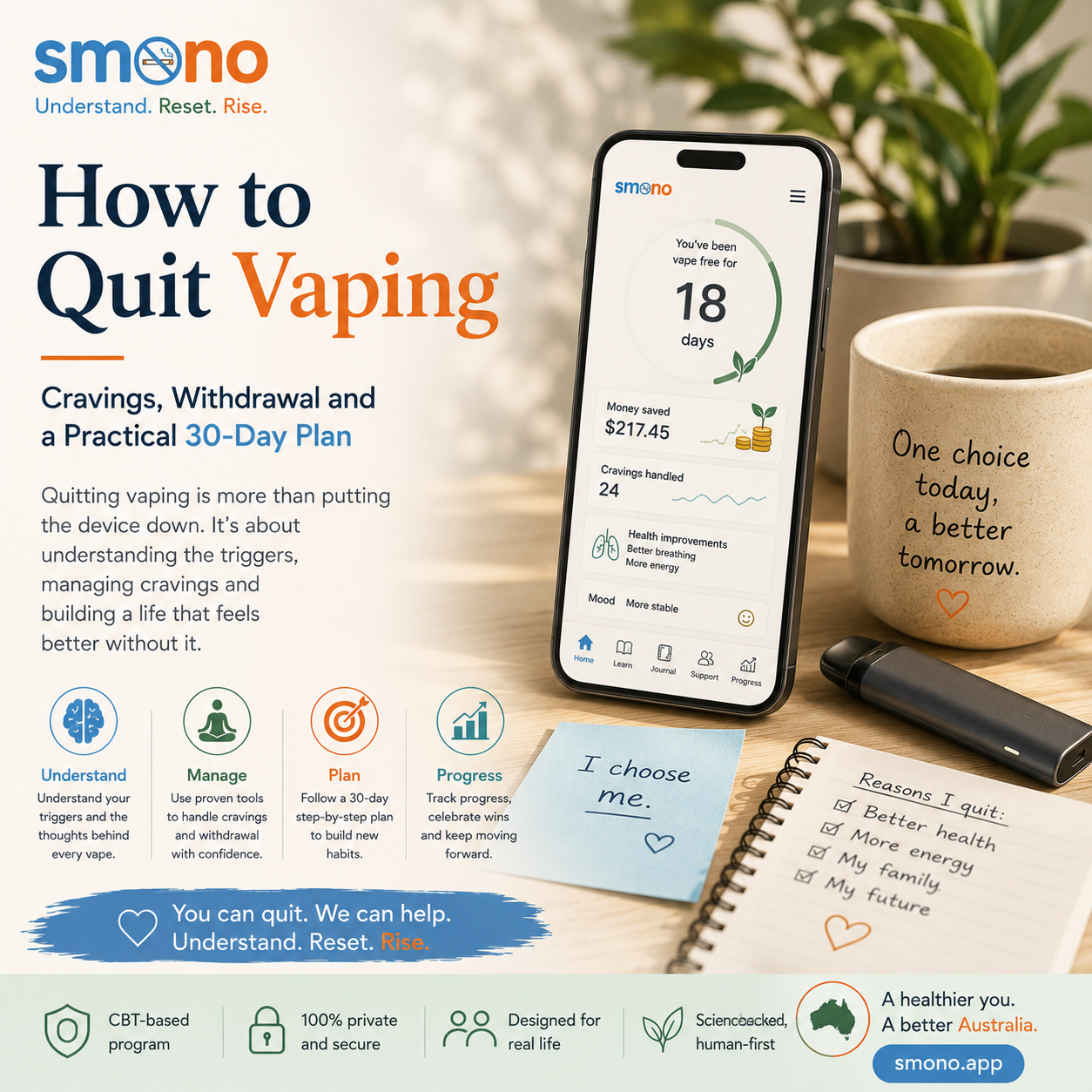
This sequencing, working through triggers deliberately across several weeks rather than expecting one hard week to fix everything, is the structure Smono's program is built around, applied to vaping using the same trigger and thought framework described above, not a version adapted from cigarettes as an afterthought.
When to speak with a healthcare professional
This is general information, not medical advice. If you are pregnant or breastfeeding, have an existing heart or mental health condition, take regular medication, or find that anxiety, low mood, or withdrawal symptoms feel unusually severe or unmanageable, please speak with a doctor or another qualified healthcare professional before or during your quit attempt.
If you want to understand more about why resisting cravings through effort alone so often fails, regardless of whether the habit is smoking or vaping, our piece on why willpower fails when you quit smoking covers the psychology behind it in more depth.
Common questions
How long does vape withdrawal last?
For most people, the strongest physical symptoms peak within the first two to three days and ease substantially within two to four weeks. Because vaping often involves frequent puffing throughout the day, some people notice the habitual side, reaching for the device out of routine, lingers a little longer than the physical withdrawal itself.
Will I gain weight when I quit vaping?
Some people notice a modest, usually temporary increase in appetite after quitting, since nicotine can suppress hunger and vaping often fills moments that snacking might otherwise fill. Keeping hands and mouth occupied with something other than food, staying active, and not focusing on the scale in the first few weeks tends to help more than restrictive dieting.
Why does vaping feel like it helps my anxiety?
Nicotine creates a brief sense of relief mainly because it is ending the withdrawal it caused in the first place, not because it genuinely calms the nervous system. Over time this creates a cycle where anxiety rises between uses and briefly drops after vaping, which can feel like the vape is managing anxiety when it is largely maintaining it.
Is there an app specifically to help quit vaping?
Yes. Some quit apps are built primarily around cigarettes and treat vaping as an afterthought, while others, including Smono, use the same trigger and craving framework for vaping directly, since the underlying pattern behind a vape craving and a cigarette craving is largely the same.
What actually helps with vape cravings?
Understanding that a craving typically peaks and fades within a few minutes helps many people ride it out without vaping. Identifying the specific thought behind the craving, such as needing it to focus or relax, and addressing that thought directly, tends to work better than relying on willpower alone.
A plan built for vaping, not adapted from cigarettes
Smono uses the same CBT framework for vaping directly, targeting the stress, focus and boredom triggers that keep pulling you back.
Begin your resetFrom $24/month, priced in your local currency · Start free